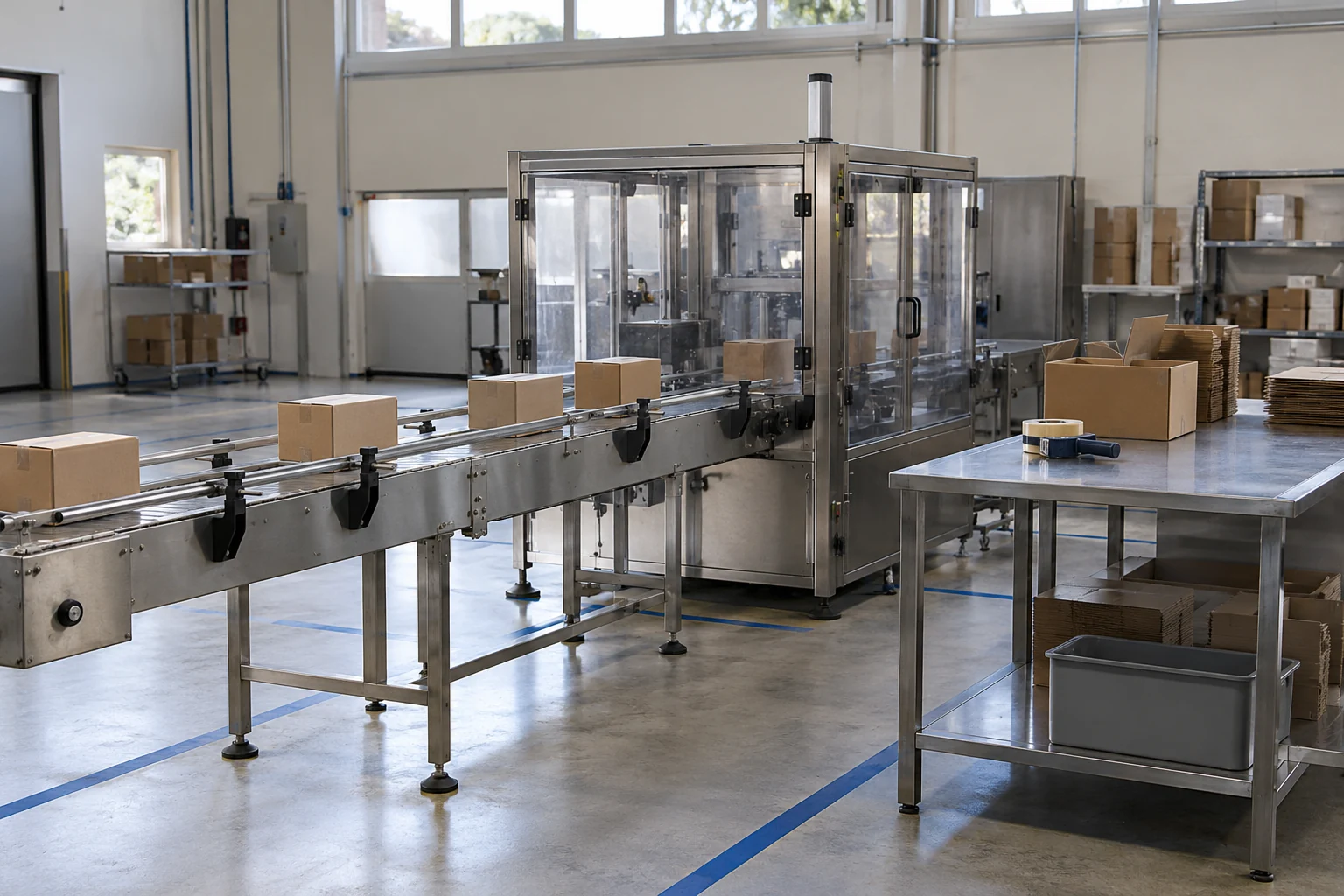
A maintenance checklist is useful when the next shift can tell what was found, what remains open and who can release the equipment. Build the record around the actual machine manual and site procedures, with a separate line for every unresolved defect.

Separate observation, servicing and release
An operator’s observation may begin the record, but it does not authorize a repair. Describe the symptom, affected pack and operating condition, then assign the work through the site’s maintenance process. Avoid converting an informal note such as “belt noise” into a repair instruction without investigation.
For applicable US servicing work, OSHA 1910.147 addresses hazardous-energy control. The actual equipment, hazards and site procedures determine the required controls. A stop button or an empty production schedule is not a substitute for that process.
Keep the maintenance task’s safety authorization separate from its quality release. Both can matter before production resumes, and they may involve different responsible people.
Build the checklist from the actual manual
Use the manufacturer’s maintenance instructions for the installed configuration to set tasks, intervals, lubricants and replacement parts. A generic internet checklist cannot establish those details. US Tape & Label’s equipment checklist illustrates issues such as material build-up and roller condition, but its general frequencies should not become a schedule for an unrelated machine.
| Record field | What to capture | Why the next person needs it |
|---|---|---|
| Asset and configuration | Machine ID, format and relevant component | Prevents the record being applied to another setup |
| Trigger | Due task, symptom or condition-monitoring observation | Distinguishes planned work from investigation |
| Procedure reference | Manual section and current site work instruction | Connects the task to an approved method |
| Finding and action | Observed condition, work completed and parts used | Shows what actually changed |
| Remaining defect | Open issue, owner and restriction | Prevents “checked” from concealing incomplete work |
| Return-to-service evidence | Required checks, result, approver and time | Makes release traceable |
Do not prefill every outcome as satisfactory. A record needs space for “not inspected,” “not applicable” and “requires follow-up,” with the reason and responsible person.
Carry open issues across the handoff
An unresolved defect should retain the same identifier until it is closed with evidence. Recopying it as a new vague note each shift can obscure how long it has persisted. Describe the restriction in operational terms so that planning does not treat the machine as available without qualification.
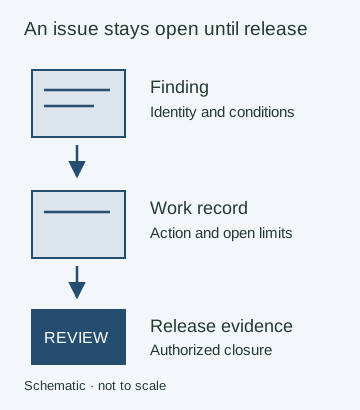
OSHA’s section 1910.147(f)(4) also addresses continuity of energy-control protection during shift or personnel changes. The handoff diagram does not show how to transfer locks or tags; use the site-specific procedure and authorized personnel for that work.
Define what closes the record
Closure needs the result of the check required by the approved task. That may involve maintenance verification, a quality-approved pack sample or another documented acceptance step. The checklist should name the requirement without inventing a universal test for every machine.
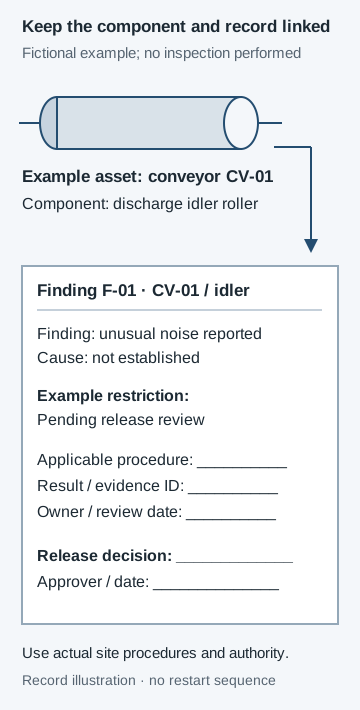
In this fictional example, “unusual noise reported” is the finding, not a diagnosis. The assigned reviewer must identify the applicable procedure, attach its result and resolve the recorded restriction before closing that record. The site’s actual authorization and energy-control requirements still govern the work; the illustration supplies no isolation or restart sequence.
A machine can run while an intermittent defect remains unresolved. Record the conditions under which the symptom was investigated and the limits of that observation. If the fault did not recur during a short check, write that fact rather than calling the cause eliminated.
For recurring problems, compare records by component, symptom and conditions. Scheduled preventive work and condition-based investigation answer different questions; a condition-monitoring signal still needs a defined response and someone responsible for acting on it. Do not claim predictive capability simply because data are being collected.
Use preventive vs predictive maintenance on a packaging line to compare scheduled and condition-based work triggers, check a bearing alarm’s scope and account for downtime and spare readiness.
Connect maintenance with production learning
Review repeated faults with operators and update training where the approved response has changed. Use the operator-training guide for the task boundary and the automation observation sheet to distinguish reliability losses from a capacity constraint. Return to packaging machinery for the wider equipment decision.
This original handoff method provides no maintenance intervals, torque values, lubrication specifications or repair instructions. It relies on the actual manual, site safety procedures and qualified release authority. No illustrated component was tested by this publication. Checked October 2026.