Automating the wrong packaging step can move a queue without improving shipments. Start by observing where accepted product waits and why, then define a trial around that constraint and its incoming and outgoing handoffs.
Observe the process before specifying a machine
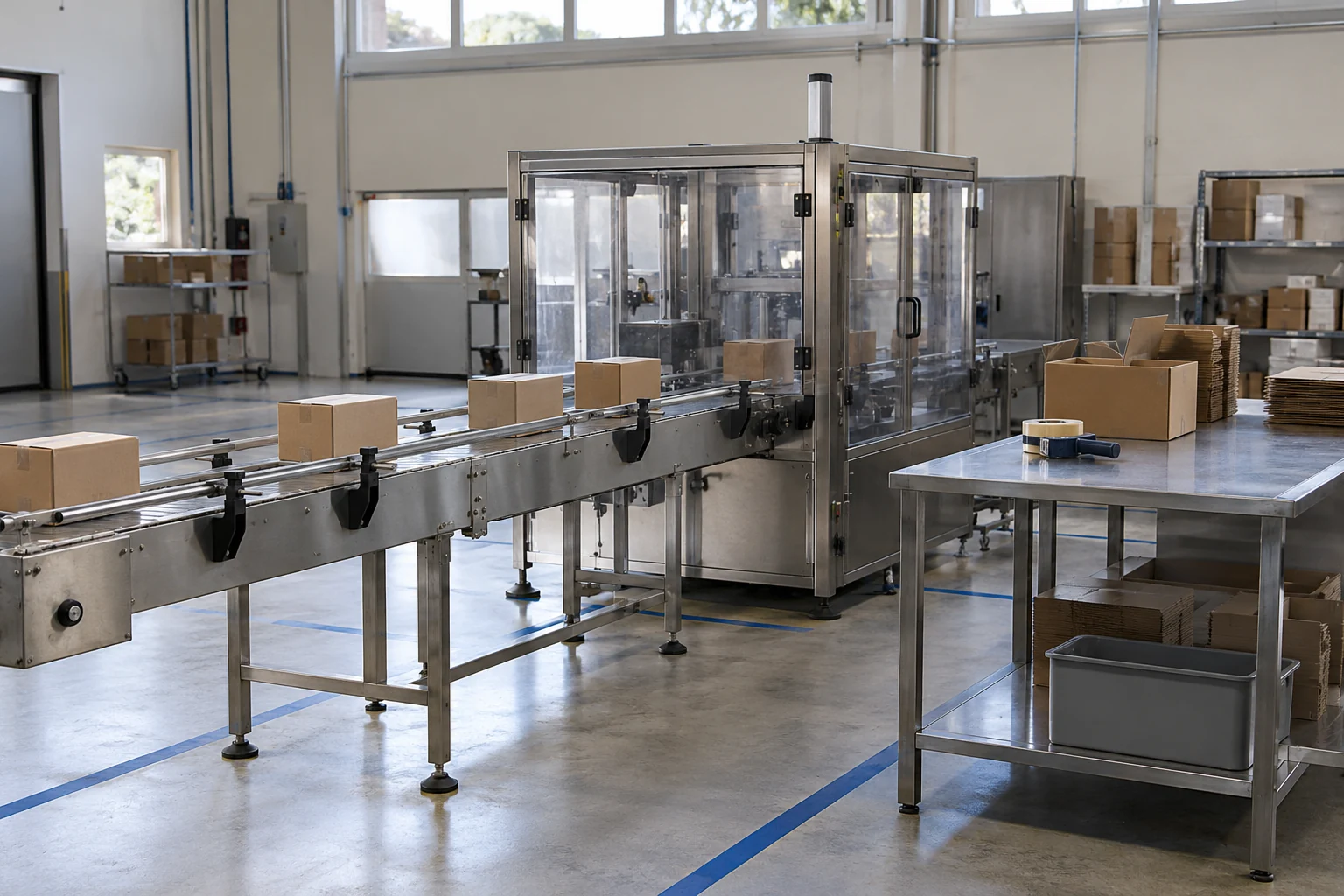
Follow one representative product family through packing, inspection and discharge. Record the same observation period at each stage. Count accepted output, stops and interventions, then note where work accumulates. A fast machine that repeatedly waits for product may have a supply problem; a station unable to discharge may be constrained by the next process.
Do not assume the longest visible queue identifies a permanent bottleneck. Batch release, a quality hold or an upstream interruption can create a temporary pile. Observe different normal operating conditions before deciding that the equipment itself is too slow.
NIST MEP’s automation guidance describes a process that begins with operational assessment, prioritizes opportunities, develops a business case and measures results. Its examples include inspection and machine tending. Those are options to investigate, not a recommendation that every small plant needs a robot.
Keep a simple observation sheet
Give the observer a defined start and finish, a product identifier and an output rule. Separate direct observations from explanations offered afterward. “The discharge conveyor was full” is an observation; “we need a larger packer” is a proposed response.
| Observation | Record at the time | What to investigate next |
|---|---|---|
| Incoming product is absent | Start/end time, upstream state and buffer condition | Release timing or upstream reliability |
| Packs cannot leave | Downstream state and accumulated product | Discharge capacity or handoff design |
| Operator repeatedly intervenes | Task, frequency and approved action taken | Presentation, material variation or work allocation |
| Rejects accumulate | Defect, sample IDs and affected conditions | Product, material or process causes |
| Changeover delays production | Work sequence and first accepted output | Preparation, adjustment or approval delay |
| Manual work dominates | Task time and product variation | A bounded assist or automation trial |
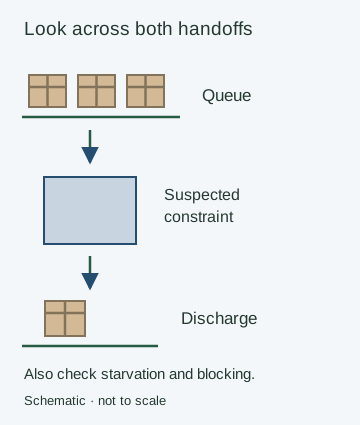
A buffer can absorb a short mismatch but cannot make a persistently slower downstream step faster. Investigate the duration and cause of accumulation rather than proposing storage as the default cure.
Include the manual work around the equipment
The machine cycle may cover only part of the job. Operators still replenish consumables, bring product, handle rejected packs and prepare the next format. Observe those tasks before assigning a labor saving to a proposed system.
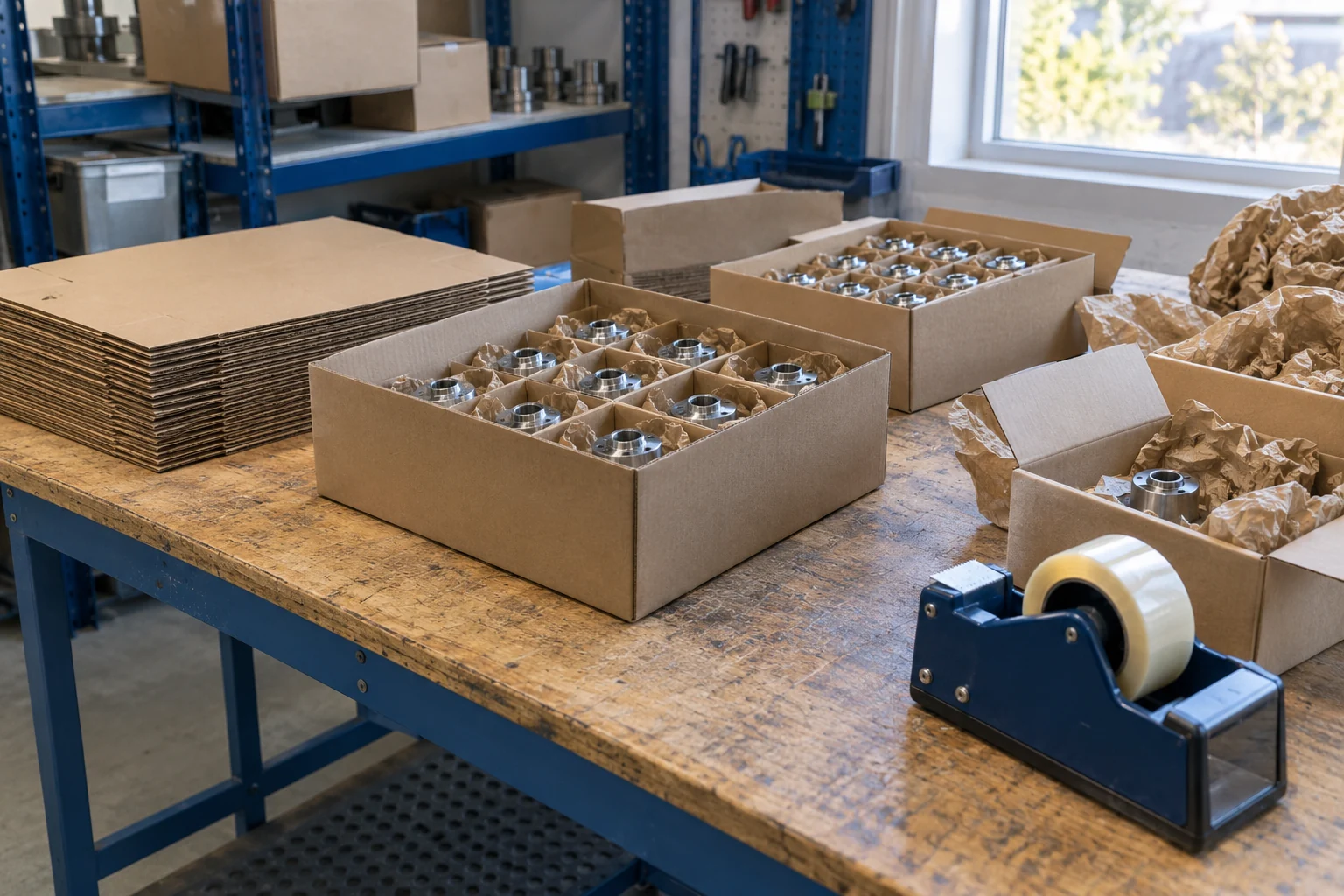
Ask whether the intervention can improve a specific task without automating the whole line. A positioning fixture or a better feed arrangement may be worth a trial if the observation supports it. Evaluate quality, ergonomics and the authorized operating procedure alongside output. Do not prescribe improvised changes to guards or controls.
Write an acceptance task that crosses both handoffs
Specify the range of incoming product and materials, the outgoing pack criteria and the next process that must accept them. Include representative formats, normal replenishment and restarts. Name who evaluates quality and who can authorize technical changes.
Measure the result at the same boundary as the baseline. If the vendor demonstrates faster machine cycles but the plant still produces the same accepted output, the original constraint may remain. Retain the observations and unresolved conditions instead of describing the demonstration as a proven improvement.
Copyable trial acceptance record
Copy these tables into the trial record and replace the blank entries. Agree the criteria before testing; leave an untested result blank and record the open action. Repeat the results table for each format or condition that needs a separate decision.
| Trial context | Baseline | Proposed alternative |
|---|---|---|
| Product, SKU and pack format | ______ | ______ |
| Material / construction revision | ______ | ______ |
| Incoming and outgoing process boundary | ______ | ______ |
| Observation date, start/end and duration | ______ | ______ |
| Output unit and accepted-pack rule | ______ | ______ |
| Equipment configuration / procedure revision | ______ | ______ |
| Acceptance check | Agreed criterion and unit | Baseline result / evidence ID | Trial result / evidence ID | Evaluator and decision |
|---|---|---|---|---|
| Incoming product and material handoff | ______ | ______ | ______ | ______ |
| Accepted output over the defined period | ______ | ______ | ______ | ______ |
| Pack quality and product protection | ______ | ______ | ______ | ______ |
| Replenishment and approved restart conditions | ______ | ______ | ______ | ______ |
| Discharge accepted by the next process | ______ | ______ | ______ | ______ |
| Open condition / untested scope | Next action and evidence needed | Owner | Due / review date | Trial disposition and approver |
|---|---|---|---|---|
| ______ | ______ | ______ | ______ | ______ |
Record the quality decision separately from the throughput result. A trial can meet an output criterion while a protection requirement or untested format keeps the overall decision open. The record does not authorize changes to the equipment or its safety procedures.
Use the capacity-denominator guide to keep time and output consistent. The batch-cost worksheet helps translate measured changes into a comparable operating model. Return to packaging machinery for the equipment and maintenance sequence.
Methods and limits
The observation and acceptance sheets are original editorial tools informed by the cited NIST process. They are not a machine specification, a safety assessment or evidence that any illustrated workshop achieved a particular output. Involve the people who operate, maintain and validate the actual equipment. Checked October 2026.