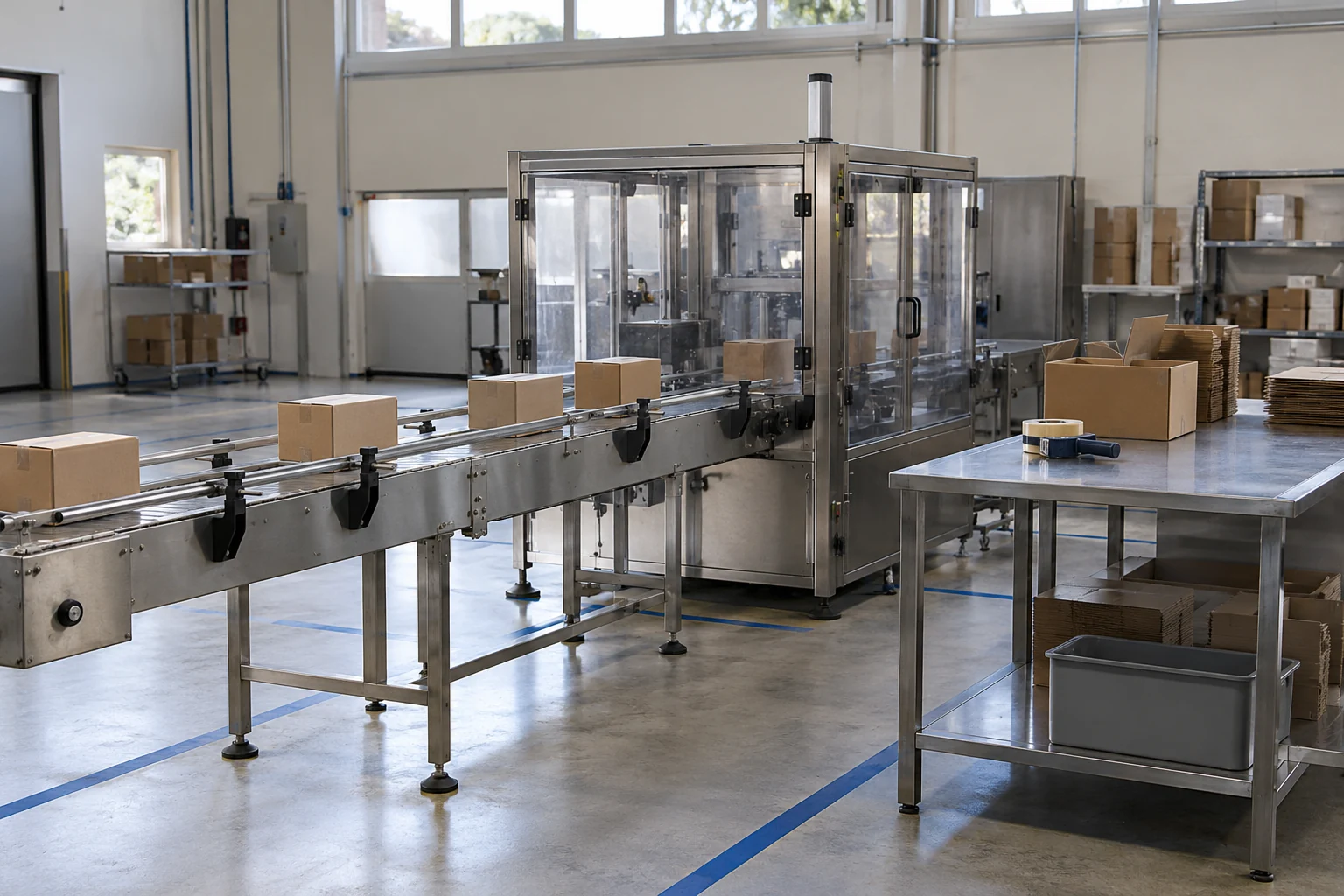
A preventive maintenance schedule that copies another plant’s calendar wastes the stop: the task arrives on the wrong machine, or it arrives without the part that makes the stop short. Syntegon’s preventive-maintenance kit note says the kit, and the recommended service intervals that come with it, are defined for the installed equipment. OSHA 1910.147 covers servicing where an unexpected start or a release of stored energy could injure someone, and it requires the machine to be isolated and rendered inoperative before that work.
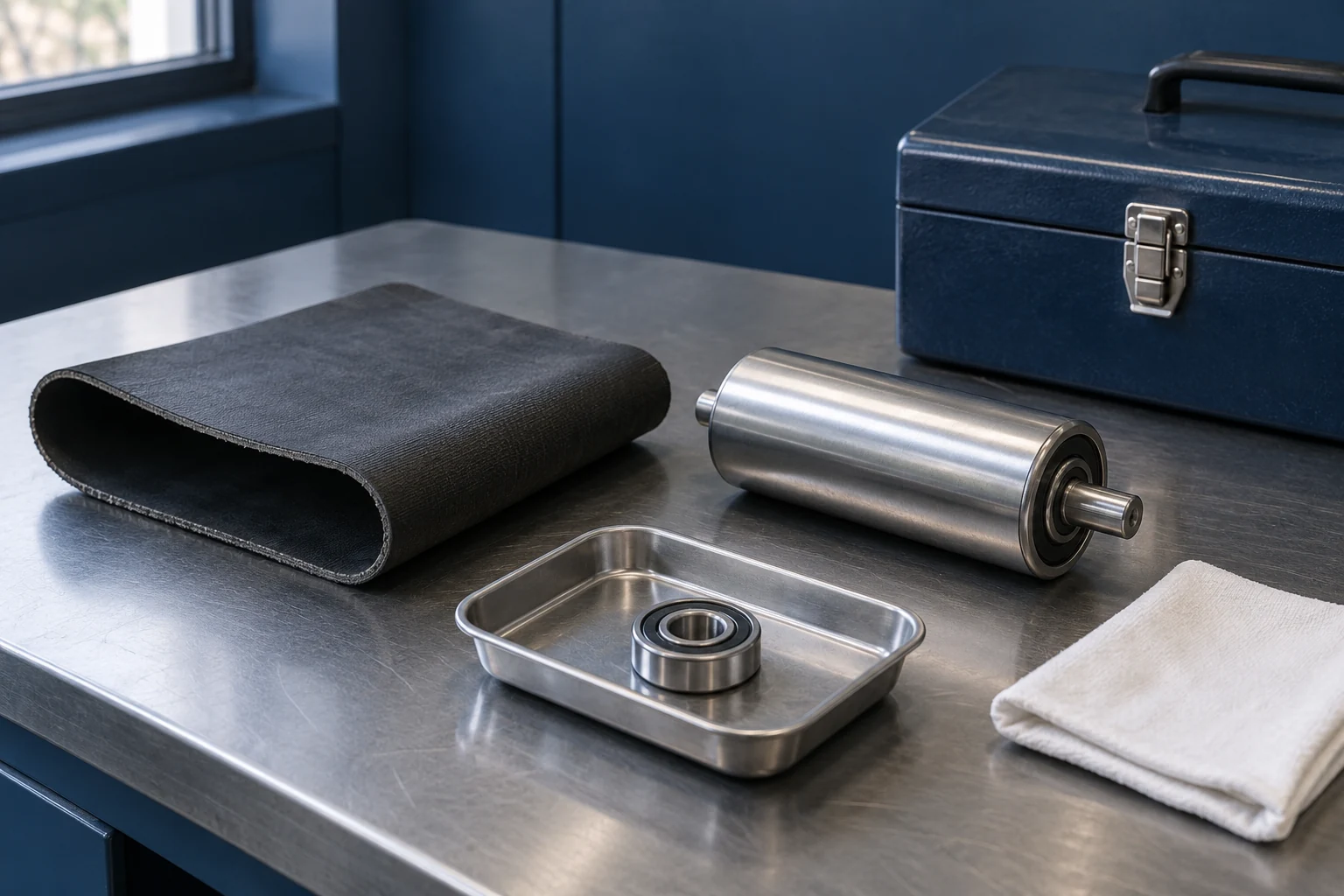
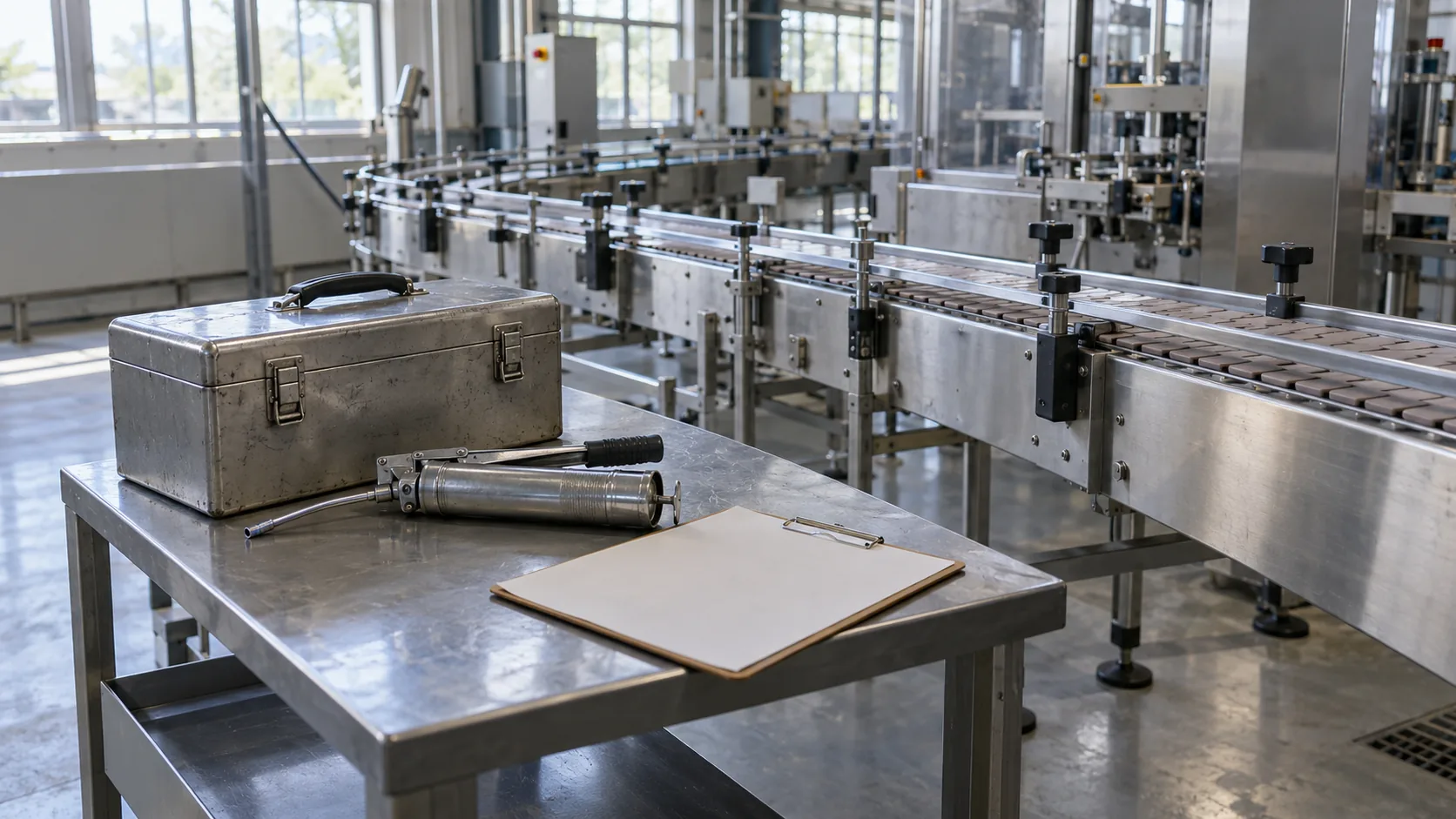
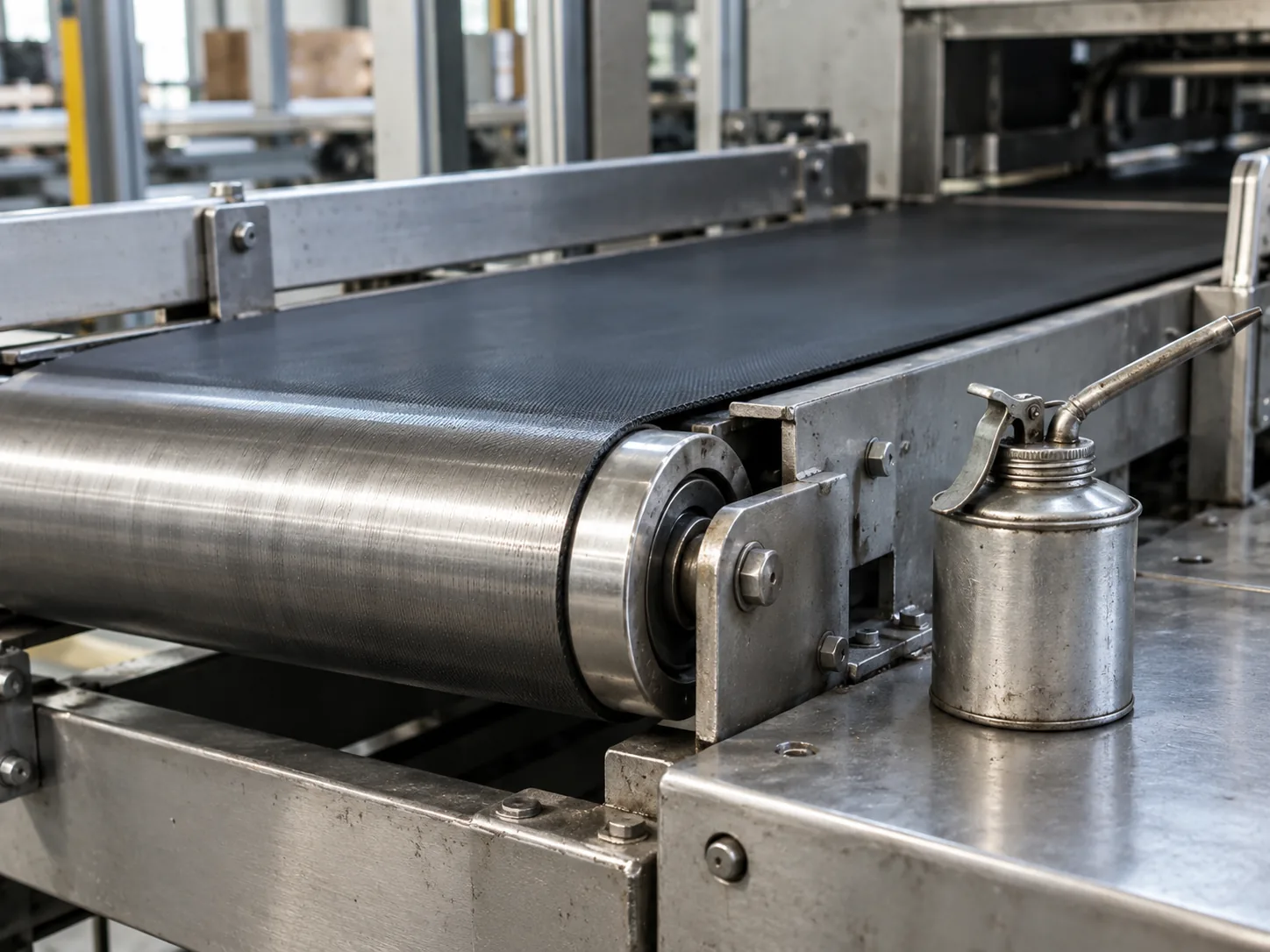
The photographs show a toolbox, a grease gun and a roller. They are not a completed inspection and they name no machine model.
Use the maintenance handoff record for what the next shift inherits. Use preventive versus predictive triggers when the question is whether a task should stay on the calendar or move to a condition alarm. This page is the calendar itself: one row per task, with the interval’s source written down.
What one schedule row has to hold
A row that says “lubricate weekly” is not yet a task. The interval, the lubricant, the point and the evidence all have to point at the installed machine. Syntegon describes kits that contain the parts and consumables exchanged on a regular basis, plus instructions that include recommended service intervals, so planners are not ordering those parts one at a time after the line has already stopped. That is an OEM packaging the interval with the parts. It is not a weekly interval you can paste onto a different sealer.
| Column | What to write | Dominant failure mode and prevention |
|---|---|---|
| Asset | Machine identity and the format it is set up for | The row gets applied to the spare machine. Prevention: the asset name is specific enough that a second machine cannot wear it. |
| Task and point | The action and the component, in the words of the manual or the kit instruction | A nickname such as “grease the line.” Prevention: name the point the instruction names. |
| Interval and its source | Hours, cycles or calendar, and the document revision | An interval borrowed from a different model. Prevention: leave the cell blank until the source is attached. |
| Minutes and window | How long it takes, and whether the line is already stopped | A 12-minute task that becomes a 40-minute stop because the part is not there. Prevention: stage the kit before the window. |
| Energy control | The site procedure that applies before servicing | Servicing a machine that can still start. Prevention: OSHA 1910.147’s isolation step, done by people authorized for that procedure. This row does not replace the procedure. |
| Close-out | Result, parts used, open defect, who released the machine | A tick that hides an open defect. Prevention: the handoff record keeps the defect id until evidence closes it. |
Rule of thumb: If the interval cell has no document revision beside it, the row is not ready to schedule. A blank beats a borrowed week.
Takeaway: Each row cites the instruction that set its interval. The template does not invent one.
Turn the rows into hours
Formula. Occurrences per year = annual production hours / interval in production hours.
Annual task minutes = occurrences per year × minutes per occurrence.
Added line-stop minutes = annual task minutes, when the task stops a running line. Added line-stop minutes = 0 when those same minutes fit inside a stop the line already takes, such as a changeover, and the task does not extend it.
Worked example. Assume a task every 40 production hours, 12 minutes per visit, on a line that runs 2,000 production hours in the year. Occurrences = 2,000 / 40 = 50. Annual task minutes = 50 × 12 = 600 minutes, which is 10 hours. If each visit stops the line, the line loses 600 minutes. If each visit fits a changeover that already lasts longer than 12 minutes, added line-stop minutes = 0, and the 10 hours are technician time only. These inputs are assumed so the arithmetic can be checked. They are not a Syntegon interval and not a recommendation.
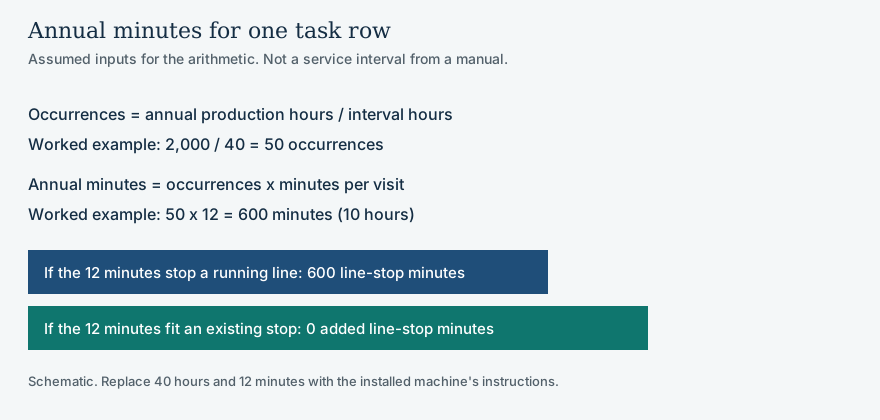
Add the rows before you treat 10 hours as a staffing number. Fifty visits also need the parts in the kit. Syntegon’s point about purchasing is that a pre-defined kit avoids the delay of identifying and ordering components one by one. A schedule that is honest about minutes and silent about parts still overruns.
What the schedule must not pretend to be
OSHA 1910.147(a)(1)(i) covers servicing and maintenance where unexpected energization, start-up, or release of stored energy could injure an employee, and it sets minimum performance requirements for controlling that energy. The standard’s energy-control language requires the machine to be isolated from the energy source and rendered inoperative before that servicing. A column on this template records which site procedure applies. It does not teach the locks, the try-step or the shift hand-off of those locks. The operator training guide is the boundary between what an operator may do and what stays with authorized maintenance.
Condition alarms do not delete the calendar. The predictive comparison is where a bearing route earns a place beside, not instead of, the tasks the manual still schedules. A vibration reading with no response owner is not a completed row.
Copy the blank row
| Field | Guidance | Your entry |
|---|---|---|
| Asset | Machine id and current format | ____ |
| Task and point | Manual or kit wording | ____ |
| Interval | Number and unit | ____ |
| Interval source | Document title and revision | ____ |
| Minutes | Observed or instructed duration | ____ min |
| Window | Running-line stop, or inside an existing stop | ____ |
| Parts staged | Kit or part ids on hand before the window | ____ |
| Energy-control procedure | Site procedure id, not a slogan | ____ |
| Result | Done, not done, or restricted | ____ |
| Open defect | Id, or “none” | ____ |
| Release | Name and time | ____ |
Repeat the row per task. Do not merge two machines onto one line to save space.
The packaging machinery section is the equipment context. The automation observation sheet is where a stop you thought was maintenance turns out to be a capacity constraint. Keep those minutes out of this schedule so the PM total is not blamed for a product queue.
Takeaway: Schedule only rows whose interval has a document behind it, then add the minutes twice: once as labor, once as line-stop only when the line actually stops.