Manufacturing automation
Capacity Utilization in Packaging Operations
Define a packaging line’s capacity denominator, time basis and product mix before reporting utilization, with a transparent arithmetic example.

Production People Practice
Section 02 / The field guides
Put a denominator under the improvement claim.
A percentage gain can hide changes in the product mix, available time or the way rejected packs are counted. Automation decisions need a baseline with a clear unit and boundary. Write down the shift calendar, the capacity basis and the batch cost definition before comparing alternatives. Keep the original calculation so that a revised assumption does not rewrite the history of the decision.
Our capacity guide focuses on the denominator and explains why an industry statistic cannot set a target for one packaging line. The cost guide then builds a batch comparison using the same output boundary. Use the two records together: throughput assumptions affect labor and overhead per pack, while costs help you decide which loss is worth investigating first. Production Line Balancing: Find the Packaging Bottleneck compares station workloads with takt and explains when accumulation can help.
Capacity Utilization in Packaging Operations. Define a packaging line’s capacity denominator, time basis and product mix before reporting utilization, with a transparent arithmetic example.
Manufacturing Cost Analysis for Packaging Operations. Create a comparable packaging batch-cost model using materials, labor, equipment and accepted output, while avoiding common double counting.
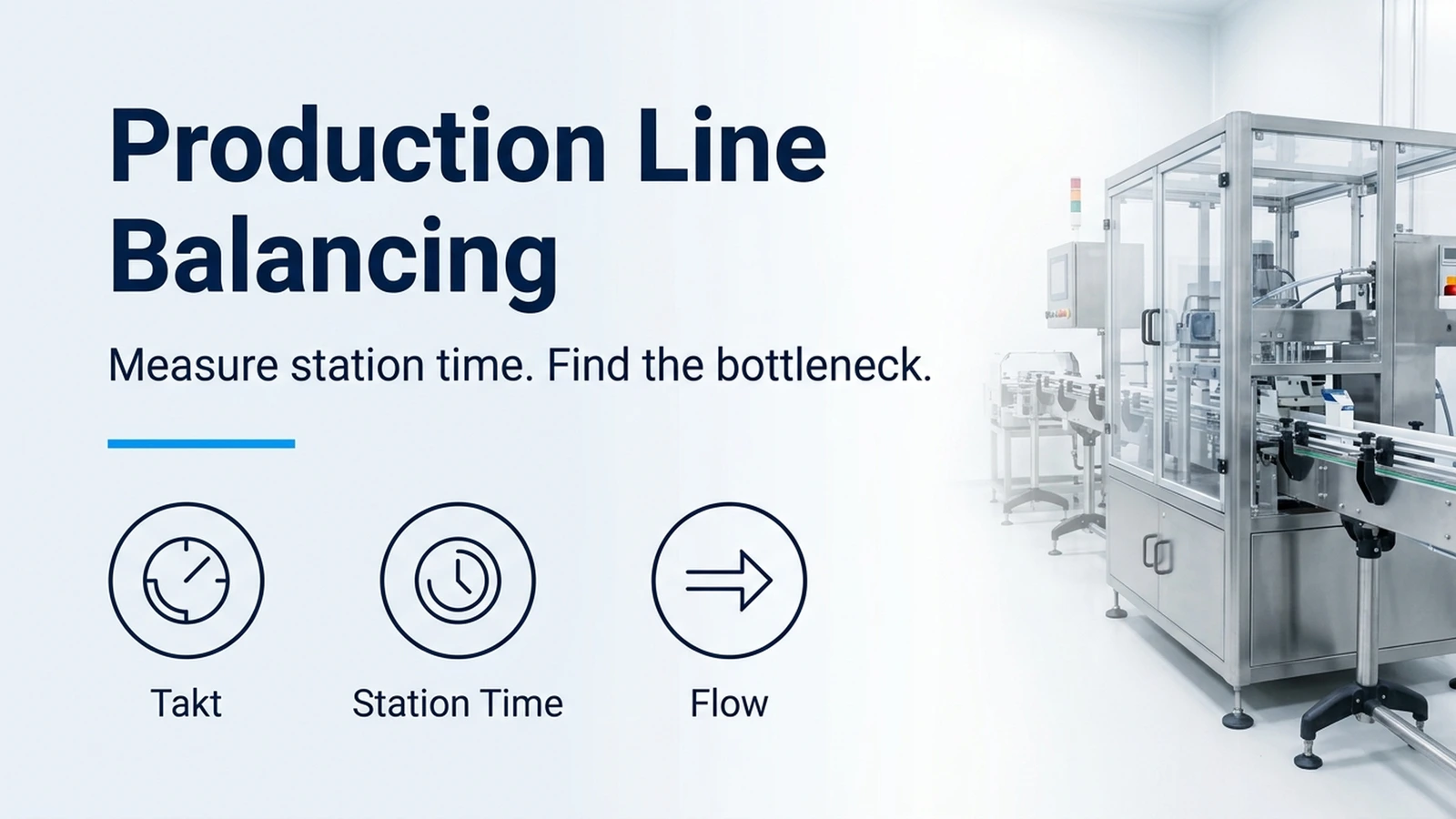
Production Line Balancing: Find the Packaging Bottleneck. Find a packaging-line bottleneck by comparing station time with takt, checking balance arithmetic and separating buffer effects from sustained capacity.
Manufacturing automation
Define a packaging line’s capacity denominator, time basis and product mix before reporting utilization, with a transparent arithmetic example.
Manufacturing automation
Create a comparable packaging batch-cost model using materials, labor, equipment and accepted output, while avoiding common double counting.
Manufacturing automation
Find a packaging-line bottleneck by comparing station time with takt, checking balance arithmetic and separating buffer effects from sustained capacity.